Artificial intelligence can transform complex language into easy-to-read text in seconds. This is exciting, but also raises important questions.
- Whose voices and sources are shaping the message?
- Does it reflect the diversity of our communities?
- Does it unintentionally reinforce stereotypes?
At CEH, our work in health literacy and our training with health and community services have shown us that good communication is more than just simplifying words. It is about human connection, understanding who you are speaking to, respecting their preferences, and sharing information in ways that feel relevant and meaningful.
Through our research and practice, we have identified some key principles for effective Plain Language:
- Focus on audience needs and preferences
- Simplify the message
- Present information carefully so it is easy to understand
Over the years we have learnt that meaningful connection with audiences is essential to Plain Language. Discussing written material with communities and using interpreters is always good practice, but finding out what audiences want and need is not always simple.
Our focus at CEH is on working with multicultural communities. We know that one size does not fit all, even for groups within the same community. For some, meaningful design choices such as displaying national flags or colours, or selecting photos that represent their community, can make resources more effective.
When we worked with international students from China and India, we learnt that despite being fluent in English, they preferred health messaging in their first language. Seeing information in a familiar language made them feel that the message was directed at them personally, and made them feel more comfortable engaging with it.
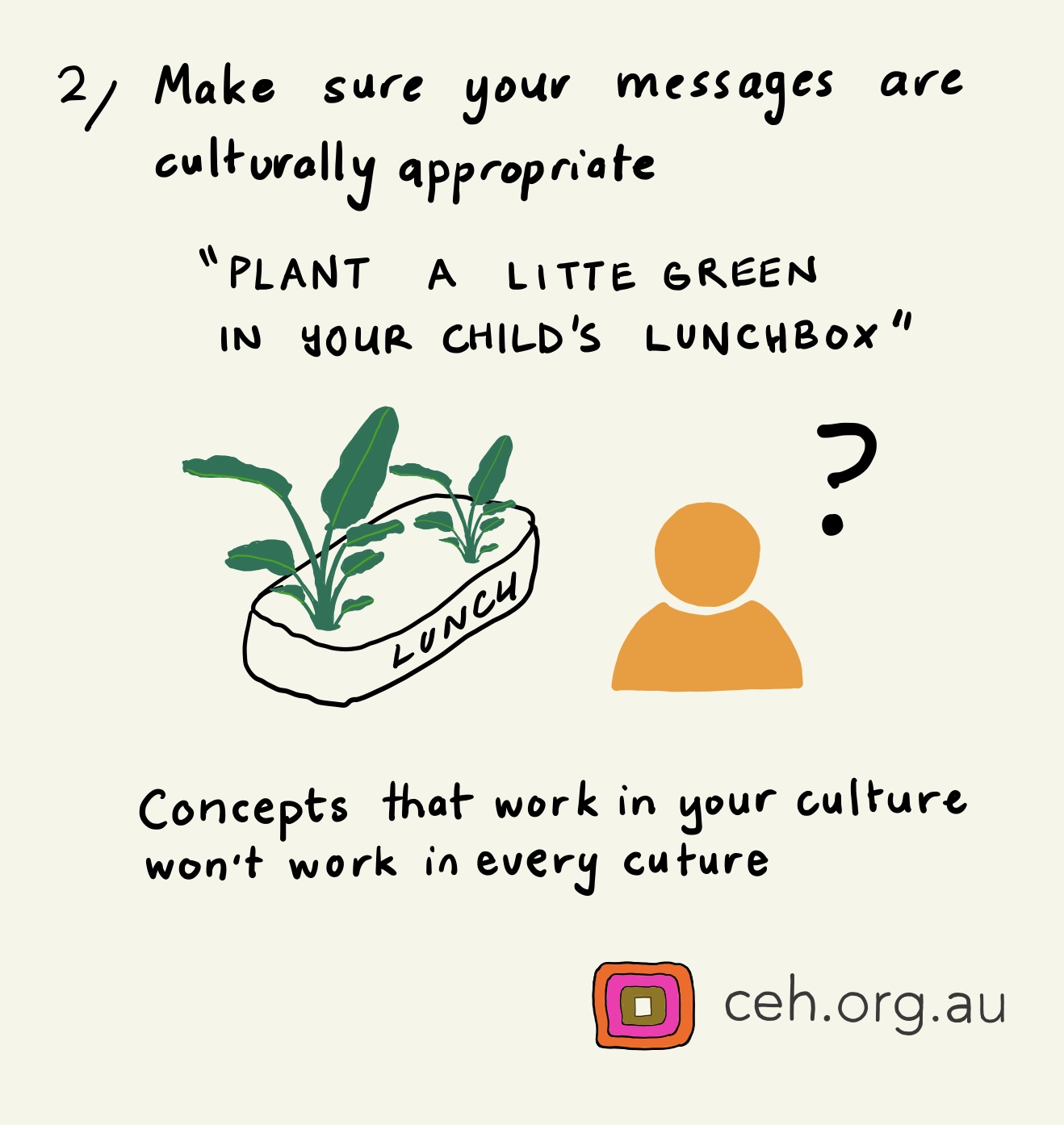
We have also seen how cultural food practices influence how health messages are received. Campaigns often encourage eating raw fruits and vegetables, but some communities mainly eat them cooked. For these groups, images of raw produce may not resonate, and so they do not make the connection with how to adopt healthier eating habits.
The use of AI is all about improving productivity. However, slowing down can be just as important. Taking time to understand needs and preferences, and to connect with communities, is ultimately what improves health and wellbeing. At the heart of this work is humanity. Technology can assist us, but it is genuine human connection, empathy and respect that make communication meaningful and lasting.